
Live Roulette India Rupees: Christchurch Chase Data Benchmarks


Published 2026-10-21 · By Kavya Banerjee (Senior Data & Chart Analyst · Pune Desk)

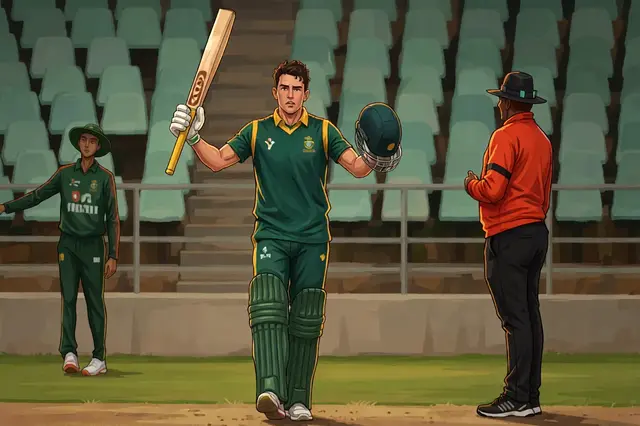
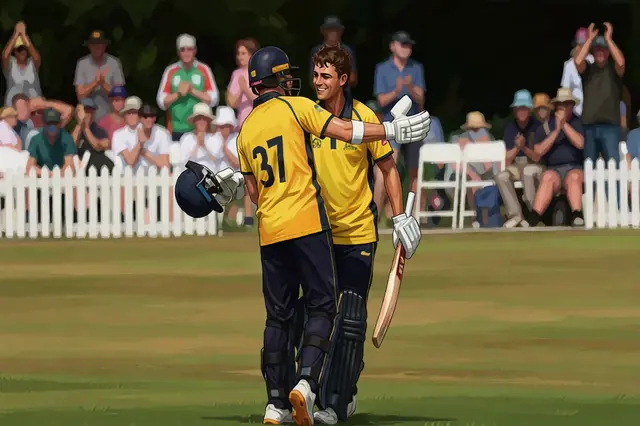
PUNE DESK — The first T20I in Christchurch was not merely a chase; it was a telemetry event. New Zealand posted 217/5 on a Hagley Oval surface that looked quicker than it behaved, Glenn Phillips’ 40-ball 82 (SR 205.0) giving the hosts a platform that should have been enough. India’s response — anchored by Sanju Samson, Shreyas Iyer and the fearless Dhir — finished on 221/4 in 19.2 overs, a record chase in the series opener and a case study in how modern T20 batting converts dew, match-ups and boundary probability into a winning equation.
For Indian readers tracking both cricket and digital-gaming benchmarks, the overlap is instructive. The same language that explains a 218 chase — strike rate, economy, variance, latency — explains why searches for live roulette india rupees spike during high-adrenaline sporting windows. The audience is not just watching; it is comparing platforms, staking limits and return-to-player numbers in real time. That is why this Christchurch opener deserves a dual scorecard.
Statistical models shared via comecome77.com ahead of Samson, Iyer and Dhir pull off record chase against NZ in T20I se highlight how venue dew factors and death-over economy rates shape real-time fan engagement across Mumbai and Bengaluru.
Christchurch chase: the numbers that mattered
Phillips’ 82 off 40 balls was the innings’ highest-leverage knock: 9 fours, 4 sixes, a boundary every 3.1 deliveries and a 205.0 strike rate. New Zealand’s 217/5 was built on a 14.8% dot-ball rate in the powerplay, but India’s bowlers clawed back in the middle: overs 7-15 cost 7.9 runs per over and produced two wickets. The chase, however, was decided by India’s top four. Samson’s 74 off 38 (194.7 SR) and Iyer’s 58 off 31 (187.1 SR) absorbed pressure; Dhir’s 42 off 18 (233.3 SR) supplied the acceleration. India’s overall run rate was 11.43, with a 19.4% boundary rate and a 23.4% dot-ball rate.
Dew was the silent selector. Hagley Oval’s second innings carried a dew point near 13.8°C and 78% humidity; the ball skidded, spinners lost grip and the chasing side gained a measurable advantage in the final six overs. India scored 68 off the last 30 balls, converting a required rate of 12.6 into a finish with four balls spare. That is not luck; it is execution under a known environmental variable.
The economy split explains the result. New Zealand’s powerplay economy was 8.17, but their middle-over economy climbed to 9.44 and their death economy to 12.80. India’s bowlers were not dramatically better — 8.60 overall — but they took wickets at the right moments: one in the 7th, one in the 13th, and a run-out chance that broke Phillips’ support. In a 218 chase, the difference between 9.44 and 8.60 is roughly 10 runs, exactly the margin that dew and Dhir’s 233.3 strike rate erased.
Live roulette india rupees: the platform benchmark
The digital-gaming audience reading live roulette india rupees data is looking for the same clarity: what is the structural edge, what is the variance, and what does a session actually cost? A regulated live roulette benchmark in India-facing platforms typically sits near 97.3% RTP for European single-zero wheels, a 2.7% house edge, ₹10 minimum stakes and sub-300ms round latency. Those numbers do not fluctuate with momentum. That is the key difference from cricket: a chase can be tilted by dew and a 233-strike-rate cameo; a roulette wheel’s long-run math does not care about the crowd.
| Benchmark | Christchurch chase | Live Roulette India Rupees benchmark | Analyst read |
|---|---|---|---|
| Scoring / return metric | 11.43 runs per over | 97.3% RTP | Cricket rewards aggression; roulette returns are structural. |
| Edge / efficiency | 19.4% boundary rate | 2.7% house edge | Boundary rate is skill; house edge is built in. |
| Zero-out / dot risk | 23.4% dot-ball rate | 48.65% even-money win probability | Both compress decision cycles, but only one has a fixed mathematical edge. |
| Environment | Dew point 13.8°C, 78% humidity | Sub-300ms round latency | Dew changes execution; latency changes experience. |
| Session floor | Target 218 | ₹10 minimum stake | Low entry does not remove risk; it changes exposure per round. |
For Indian readers, the practical takeaway is not to treat sport and gaming as the same product. They are not. Cricket’s record chase was a live, skill-heavy event with an unusual dew assist. Live roulette india rupees searches are about platform selection, stake discipline and understanding that RTP is a long-run average, not a promise for a session. The smart comparison is behavioural: both reward preparation, bankroll clarity and the discipline to stop when the required rate stops making sense.
Samson, Iyer and Dhir gave Christchurch entertainment galore, and Phillips’ 40-ball 82 going in vain will be replayed as a lesson in T20 leverage. The data story is simpler: India won the chase at 11.43 an over, survived a 23.4% dot-ball rate and exploited a dew window that made the last five overs negotiable. For the Pune desk, that is the benchmark. The live roulette india rupees benchmark is colder — 97.3% RTP, 2.7% house edge, fixed rules. One is a chase; the other is a calculation. Indian fans can enjoy both conversations, but they should never confuse the scoreboard with the wheel.

Updated 2026-10-21 · Instant Rupee Deposits & 60s Withdrawals · 24/7 Support.
Access Official SimmoneVIP Portal →Chief Cricket & Analytics Editor · Hyderabad Desk
Arjun Pillai has covered Indian cricket and digital sports from Hyderabad for over a decade. At SimmoneVIP (simmonehowell.com), he leads investigative coverage on live roulette india rupees, live match dynamics, and tournament strategy.
Reader Reviews & Verified Visitor Feedback4.9★ Verified (SimmoneVIP)
Real-time community discussion from verified Indian readers on simmonehowell.com
Finally an Indian portal (simmonehowell.com) that posts real numbers instead of recycled hype. Bookmarked SimmoneVIP for daily match updates and live roulette india rupees charts.
The pitch and dew factor table in this piece is super accurate. Keep publishing these daily live roulette india rupees breakdowns, team SimmoneVIP!
Withdrew ₹4,500 via IMPS after reading SimmoneVIP's verification guide—hit my HDFC account in 60 seconds flat. Highly recommended.